

+918048032706

Currently it only shows your basic business info. Start adding relevant business details such as description, images and products or services to gain your customers attention by using Boost 360 android app / iOS App / web portal.

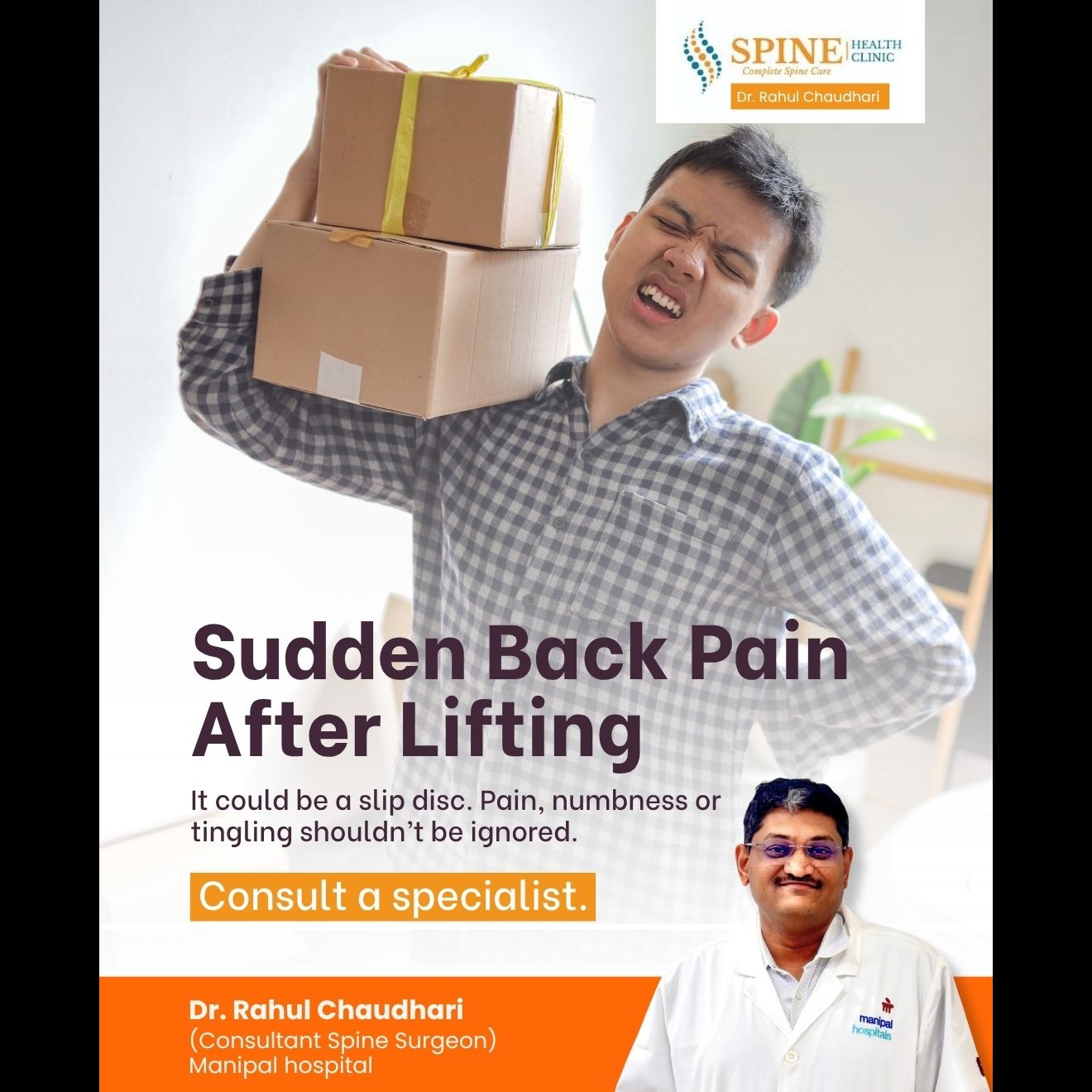
While it may seem like a simple muscle strain, in some cases it can be a sign of a slipped disc (disc herniation) or nerve compression. Improper lifting techniques, twisting while carrying weight, or lifting objects that are too heavy can place excessive pressure on the spinal discs. This may lead to lower back pain, muscle spasm, pain radiating to the legs, numbness, tingling, or weakness. If these symptoms persist or worsen, they may indicate nerve involvement that requires medical attention. The best way to prevent lifting-related back injuries is to bend your knees, keep the object close to your body, avoid twisting while lifting, and use your leg muscles instead of your back. Regular core strengthening exercises and maintaining proper posture also help protect your spine. If you experience severe back pain after lifting, especially if it is associated with leg pain, numbness, or weakness, consult a spine specialist without delay. Early diagnosis and treatment can prevent long-term complications and improve recovery.


